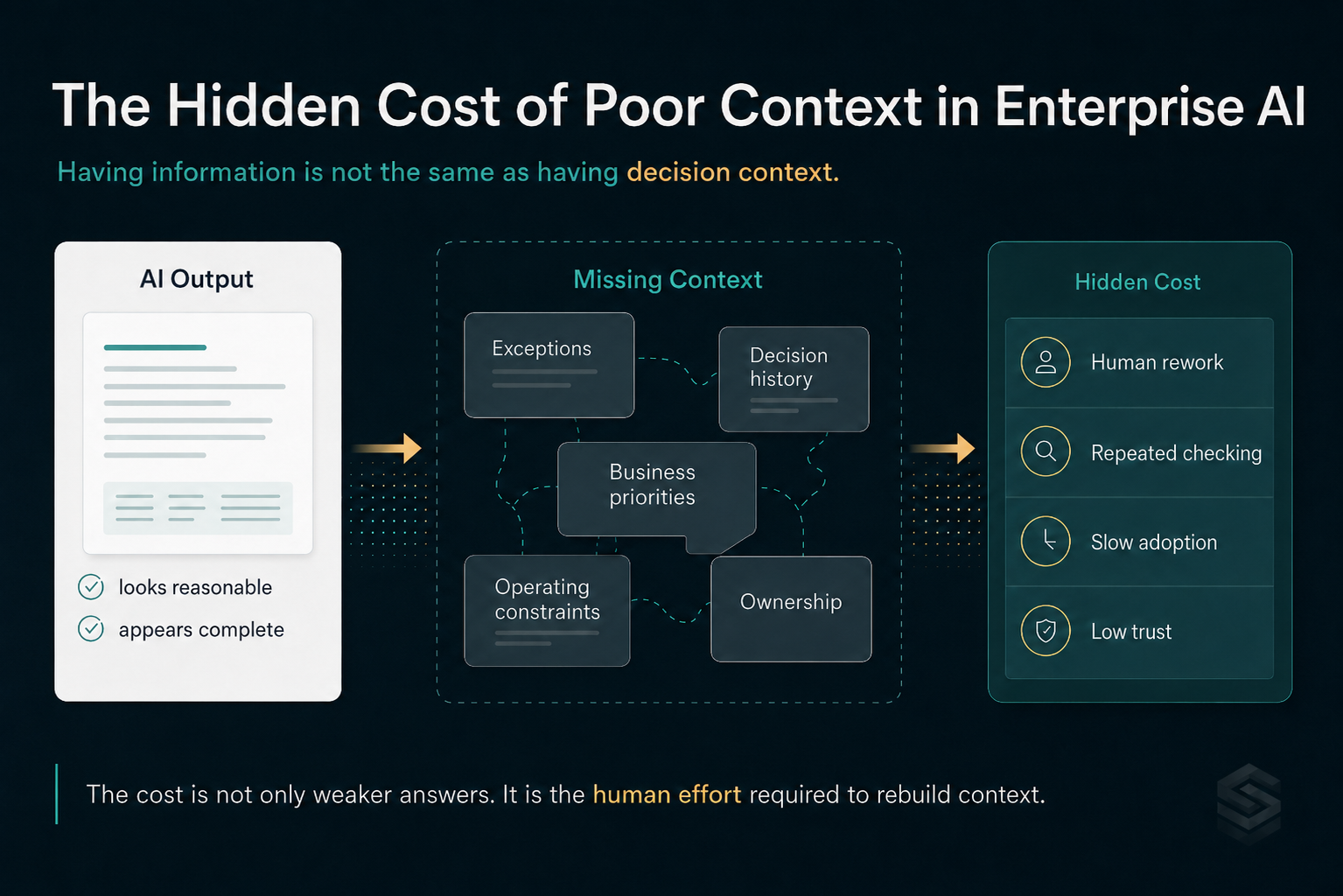
The hidden cost of poor context in enterprise AI is not only a wrong answer.
It is the time the organisation spends checking, correcting, explaining, reworking and losing confidence in the system.
Many AI pilots look promising in a demo because the question is clean and the context is curated. Real enterprise work is different. The relevant information may sit across emails, policies, transactions, exceptions, ownership notes, approval histories and tacit judgement.
When the AI system does not have the right context, the model may still produce fluent output. That is the risk. The answer looks useful enough to inspect, but not reliable enough to act on.
The cost then shifts to the human layer.
People spend time verifying what should have been grounded. They ask another team for missing context. They override the output but do not capture why. They slowly learn that the system is impressive but not dependable.
The better question before scaling an AI workflow is not only: is the model capable?
It is: what context does this decision actually require, where does that context live, who owns it, how fresh must it be, and what should the system do when context is missing?
Enterprise AI is rarely just a model problem. It is a context, workflow and decision-readiness problem.